By Atul Chadha, Chief Technology and Information Officer, Affinity Solutions
When I first spotted Burger King’s early-September spend spike, I noted that a launch week isn’t the test; what consumers do several weeks later is. With more data in, I’ve now run that test.
Promotions can drive immediate consumer interest, but how long does that interest keep translating into actual spending?
Burger King’s and McDonald’s recent campaigns show how different promotional strategies influence purchasing behavior, and why the structure of an offer may matter as much as the initial excitement it generates.
In September, Burger King relaunched its chicken nuggets alongside a limited-time Dragon Ball Super collectible promotion. A month later, McDonald’s brought back its popular MONOPOLY® Game, rewarding customers with opportunities to win prizes through qualifying purchases.
I analyzed consumer spending and transaction patterns surrounding both campaigns, drawing from Affinity Solutions’ fully permissioned credit and debit card transaction data representing 195M+ consumers. While each generated measurable increases in activity, the results revealed two distinct patterns: an immediate spike that quickly faded and a more gradual increase that continued building over several weeks.
Burger King’s Launch Delivered an Immediate Spike
The September 1 relaunch paired the nuggets with the Dragon Ball Super Power Up Pack, a limited-time meal built around them that came with collectible figurines tied to Dragon Ball Super. The combination of a new menu item and limited-time collectibles gave consumers an incentive to visit during the launch.
During launch week, Burger King’s spending rose roughly 10% above its summer baseline (July 19–August 23), while transactions rose 6.7%. Average card transaction value also increased 2.7%, from $15.38 to $15.79. Around 70% of the increase in spending came from additional transactions, suggesting the promotion mainly encouraged people to make purchases more often.
Burger King also gained ground relative to McDonald’s, with its spending ratio reaching 23.9% compared with a summer average of 21.6%. Daily data showed that activity peaked the day after launch, when Burger King’s transactions reached 20.4% of McDonald’s volume.
However, the lift was short-lived. By September 6, much of it had faded, and over the following eight weeks, Burger King’s spending and transactions averaged essentially flat against its summer baseline, with no sustained change in purchasing activity through October 31. A small uptick in the last week of October was matched by McDonald’s, potentially pointing to seasonal factors rather than a delayed effect of the launch.
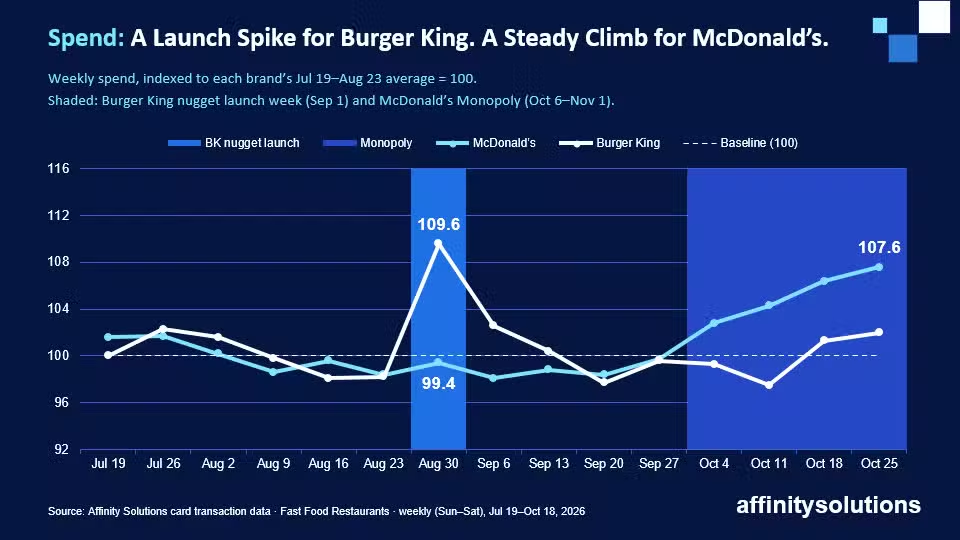
Figure 1. Weekly spend, indexed to each brand’s July 19–August 23 average = 100
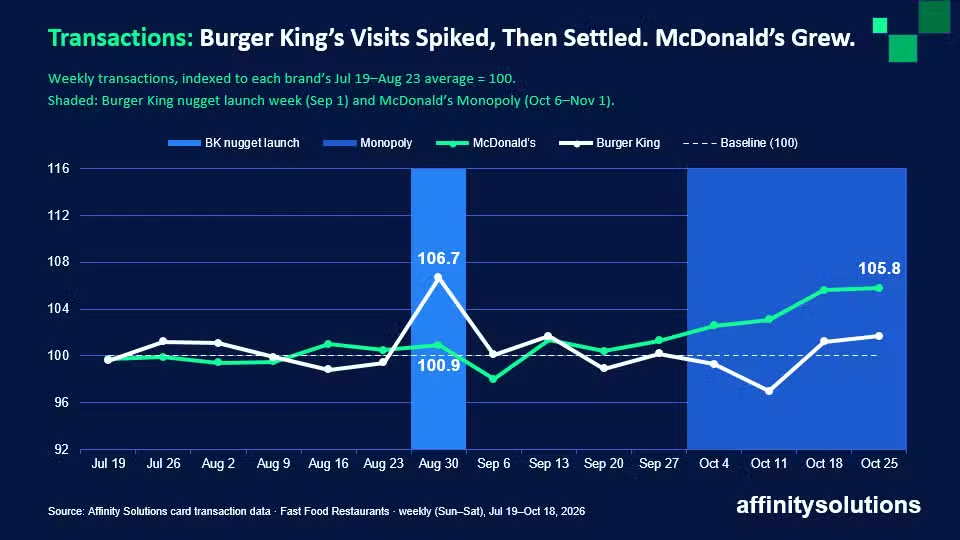
Figure 2. Weekly transactions, indexed to each brand’s July 19–August 23 average = 100
McDonald’s Monopoly Kept Spending Climbing
McDonald’s MONOPOLY® Game promotion, which launched on October 6, followed a different model. By giving consumers opportunities to collect game pieces and win prizes with qualifying purchases, the campaign created an ongoing incentive to participate throughout the promotional period.
The spending data reflected that approach. McDonald’s spending increased 2.8% above its summer baseline in the first week of the promotion, followed by 4.3%, 6.4% and 7.6% in the subsequent weeks. Transactions followed a similar trajectory, reaching 5.8% above baseline by the week of October 25, the last full week of game-piece purchases.
Both campaigns drew most of their lift from additional transactions, but McDonald’s leaned on them even more. Average card transaction value rose about 1% over the promotion, compared with 2.7% in Burger King’s launch week, and roughly 80% of McDonald’s spending lift came from additional transactions.
This pattern is consistent with a promotion designed to encourage repeat purchase occasions. Rather than concentrating consumer activity around a single launch, Monopoly provided an incentive to continue participating over multiple weeks. Spending kept rising through the last full week of the promotion, although weekly gains were narrowing by late October. Game pieces were available with purchases through October 31st, so the coming weeks will show whether the higher level holds.
Why Promotional Design Matters
The contrast between these campaigns highlights how promotional design can shape both the magnitude and duration of consumer response.
Burger King’s combination of product innovation and collectibles coincided with a larger immediate increase in spending, which points to the pull of novelty and limited-time offers in driving product trial. McDonald’s MONOPOLY® Game campaign produced a smaller initial increase but sustained momentum over several weeks, which suggests that ongoing incentives may encourage more frequent purchase occasions.
The results also reinforce the importance of looking beyond total sales. Understanding whether growth comes from additional transactions or larger purchases shows how consumers are responding to an offer, and tracking those patterns over time reveals whether a campaign is generating temporary interest or supporting sustained engagement.
Competitive context matters too. Although Burger King’s spending relative to McDonald’s declined during October, from 21.6% in the summer to about 20.6%, its own spending remained relatively steady. This suggests McDonald’s gains were not necessarily coming at Burger King’s expense, which is why it is worth examining broader category behavior before drawing conclusions about market share shifts.
For marketers, these findings raise an important consideration when developing promotional strategies: whether the objective is to drive immediate trial, increase purchase value or encourage consumers to return over time. Each requires different incentives and a different approach to measuring success.
Ultimately, measuring promotional performance over multiple weeks is essential: the initial spending increase shows how consumers respond to an offer, while the weeks that follow show its lasting impact. Burger King’s launch was a moment of attention that faded. Whether McDonald’s Monopoly is a lasting change in behavior will become clear in the weeks after November 1, once the promotion’s incentives are gone.
About the data: This analysis uses Affinity Solutions’ credit and debit card transaction data through October 31, 2026. Weeks run Sunday to Saturday. Weekly spending and transaction indices are compared with each brand’s July 19–August 23 average. Results reflect activity within the Affinity Solutions panel and show associations with promotional timing, rather than establishing causation.